Originating from the same tea tree, but due to the processing methods, there are two types of tea: Raw Pu-erh and Ripe Pu-erh. Many people still have certain concerns about these two types of tea.
The following article will help you distinguish between raw and ripe tea based on historical stories, processing methods, appearance, sensory experience when tasting, and health benefits.
1. DISTINGUISHING RAW AND RIPE PU-ERH
1.1 Raw Pu-erh Tea
According to the national standard of China, raw Pu-erh tea is defined as: a type of tea made from sun-dried tea leaves (sái thanh) from the large-leaf tea variety of Yunnan (Đại Diệp Chủng) within the geographical indication protection area. Absolutely not undergoing the “piling” process, it is processed into loose tea (tán trà) or pressed cake/block tea (khẩn áp trà).
To explain it simply, raw Pu-erh tea is made from the large-leaf tea variety. In Yunnan, it is called Đại Diệp, while in our country, it is referred to as Shan Tuyết ancient tea variety. Since the term “Pu-erh tea” is protected by geographical indication, only tea within the Yunnan region can use this name.
Pu-erh here is the name of a town that served as the tea trading center of Yunnan in ancient times. By the time of the Qing dynasty, the court established the “General Tea Shop” in Pu-erh Prefecture to nationalize and directly manage the tea purchasing and trading process, instead of allowing merchants to trade freely as before.
Bạn có thắc mắc về trà?
Trò chuyện trực tiếp qua Zalo để nhận phản hồi và tư vấn nhanh nhất.
 Nhắn tin qua Zalo Quét mã QR để nhắn tin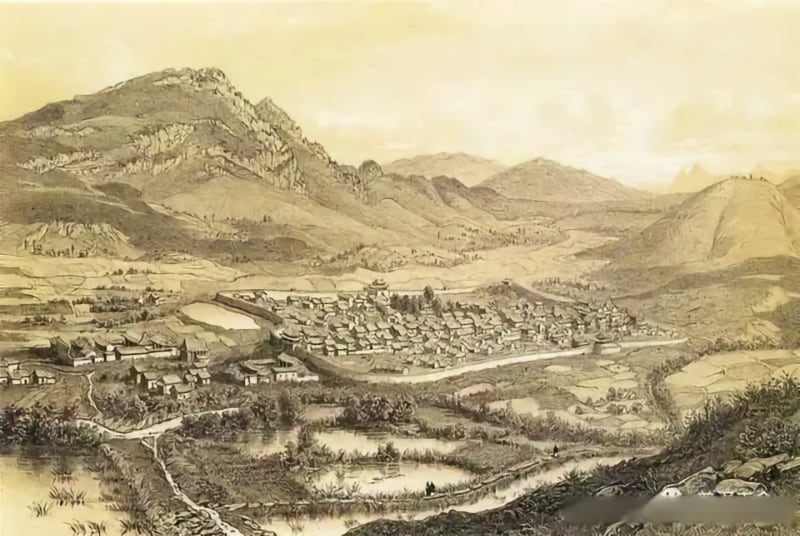
Since Pu-erh has been protected, and is currently a city still existing in Yunnan, in Vietnam, although the processing methods and materials are similar, this type of tea should only be referred to by a different name when commercialized. For example, I often simply call it “raw tea” or “ripe tea”. Or “Shan Tuyết raw tea”, a name that reflects the type of tea (raw) and the material used (Shan Tuyết).
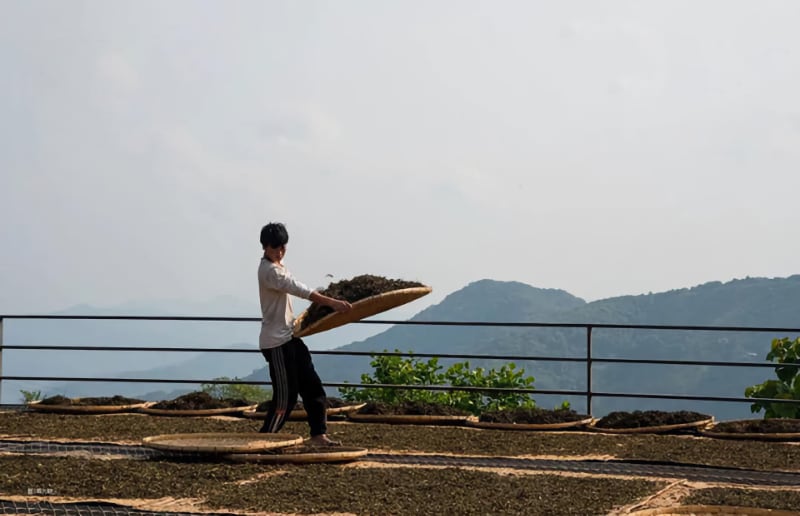
Sun-drying (sái thanh) is a characteristic method of Pu-erh tea. This technique has existed since ancient times; in its early days, tea was only roughly sun-dried after being picked. About 5-600 years ago, the tea-making technique became more refined, including the steps: pan-frying (to kill the green), rolling, and sun-drying. This method still exists to this day, and with this method, the tea has a fresh flavor. At the same time, it emphasizes the originality of the tea tree and the terroir more. Those who want a “pure” flavor can choose to store the tea for many years.
Raw tea can be stored for many years without spoiling. Instead, the tea leaves will change in color and flavor towards a more stable direction. The longer the tea is stored, the more valuable it becomes; over 10 years (in some places, 15-20 years) is called “aged Pu-erh tea”. In terms of standards, there are no regulations that tea over 10 years is called “old tea” or “aged tea”. This is simply a common convention among tea makers, sellers, and drinkers.
1.2 Ripe Pu-erh Tea
For ripe Pu-erh tea, by definition, it is: a type of tea made from sun-dried tea leaves (sái thanh) from the large-leaf tea variety of Yunnan within the geographical indication protection area. Must undergo the “piling” process and be processed into loose tea or pressed cake/block tea.
If we compare the differences between the two types of tea, ripe Pu-erh tea must undergo a crucial step called “piling”, or a more complete name is “artificial fermentation piling”.
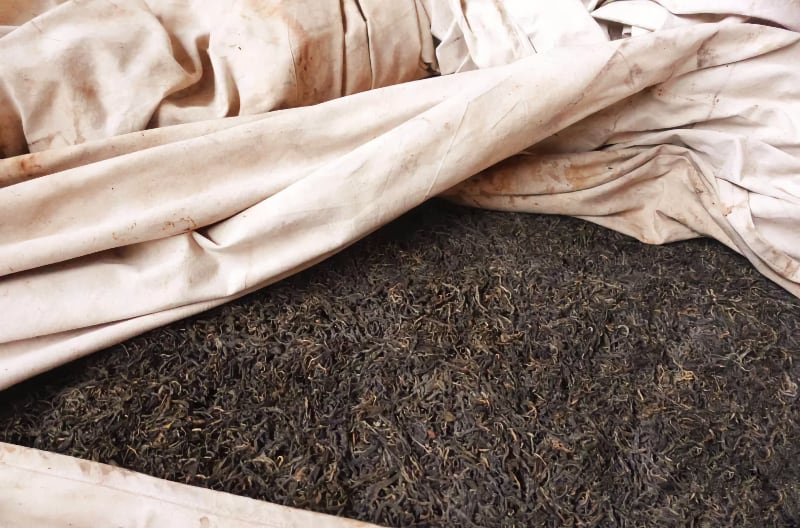
Piling here is when the tea leaves are stacked high. Then the pile of tea is covered with a tarp and watered. Under the influence of high temperature (self-generated in the tea pile), humidity, and beneficial bacteria, the tea leaves will undergo a rapid transformation process, helping to create components that produce flavors similar to aged Pu-erh tea, within just 45 to 60 days.
After piling, depending on the region, materials, and piling method, ripe tea will have aromas like “trần hương” or “lão hương”. This is a composite aroma of aged agarwood, herbal medicine, red dates, or wild honey.
2. HISTORY
Pu-erh Tea has a long history associated with the tea region of Yunnan. According to the book Man Shu recorded in the 9th century, raw Pu-erh tea was called Sái Thanh Mao Trà. Mao Trà means loose tea, while Sái Thanh means “sun-dried”.
The book states: “Tea is produced in the mountainous regions of the borders of the city of Ngân Sinh, picked to be loose (tán thu), without complicated processing methods. The Mông Xá Man people when brewing tea often add pepper, ginger, and cinnamon to drink.”
This passage means that tea produced belongs to the area around the city of Ngân Sinh. This place is a strategic military and trade stronghold built by the ancient Nanzhao kingdom. Nanzhao is an ancient kingdom in Yunnan. They also had bloody invasions and captured the Đại La citadel (present-day Hanoi) in the 9th century.
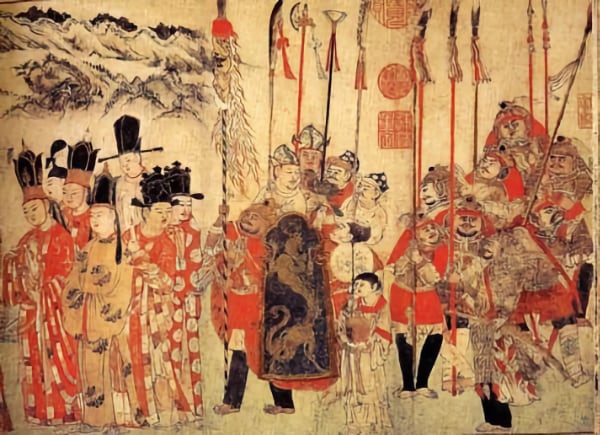
The Mông Xá people mentioned in Man Shu are the tribe that founded the Nanzhao kingdom. They were once the dominant tribe over other smaller tribes, including the Bộc people. The Bộc people are considered the first group to harvest and process tea from ancient tea trees. The Mông Xá people, as the ruling class, had the habit of using tea made by the Bộc people.
The book also states that tea at this time “did not have complicated processing methods”, tea was only “sun-dried and rolled”. This processing method is “much more primitive” compared to the tea-making methods of the Ming – Qing dynasties later. Not only upgraded in processing methods, Pu-erh tea was also upgraded to “court tea” or “tea for the emperor”. So in the palace, there is the famous saying: “In summer, drink Longjing tea, and in winter, drink Pu-erh tea.”
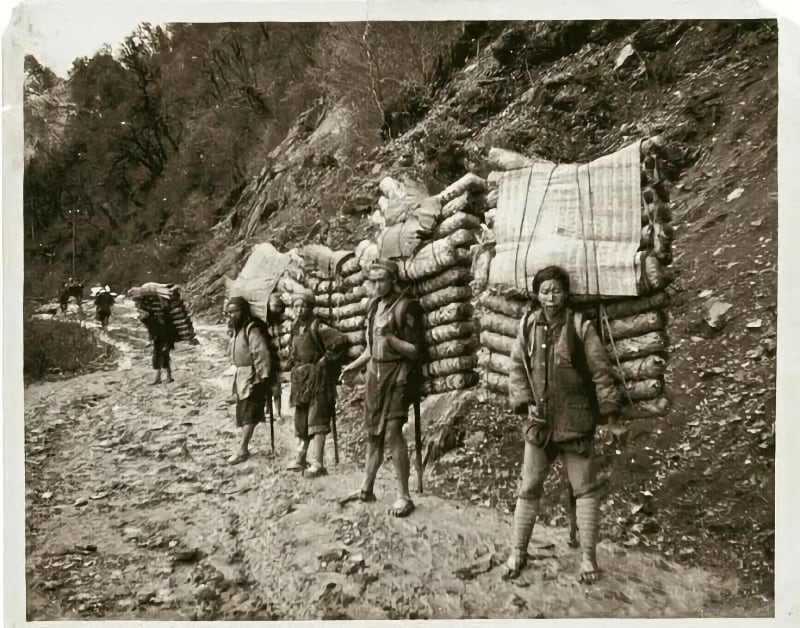
Ripe tea naturally formed from long transport trips by camels and horses on the Ancient Tea Horse Road, where humidity and time helped the tea to self-transform. It wasn’t until the 1970s, with the advent of the “piling” technique, that the familiar ripe Pu-erh tea product line was officially born. The term “ripe” was only officially used and widely recognized then.
In the early 1970s, China began its economic opening policy. With the goal of earning as much foreign currency for the country. And exporting tea was one of the key industries.
During this period, Hong Kong, Taiwan, and Southeast Asia favored ripe Pu-erh tea, especially the aged Pu-erh tea group, with dark red tea and a sweet flavor. The supply of aged tea was insufficient, while the demand in places like Hong Kong (tea houses, dim sum restaurants) was too high. This made finding a way to “age” tea in a short time become urgent.
In 1973, a technical team from Yunnan went to Guangdong to learn a technique called “tea moisture activation”. This is a primitive technique originating from tea storage warehouses in Guangdong and Hong Kong. They sprayed water on the tea pile, then covered it with a tarp. The principle is to take advantage of the self-generated heat and high humidity to rapidly “age” the tea and sell it on the market at a better price.
Immediately after obtaining the “secret” back to Yunnan, the tea factories of Yunnan Tea Company began to experiment with the new piling technique. The successful factory was Mạnh Hải Tea Factory, which optimized the “high moisture fermentation” process, that is, “piling”. By stacking the tea into piles, covering the tea pile with cloth, and then watering it. This promotes the microbial fermentation rapidly within 45 – 60 days, helping to create profound chemical and flavor transformations.
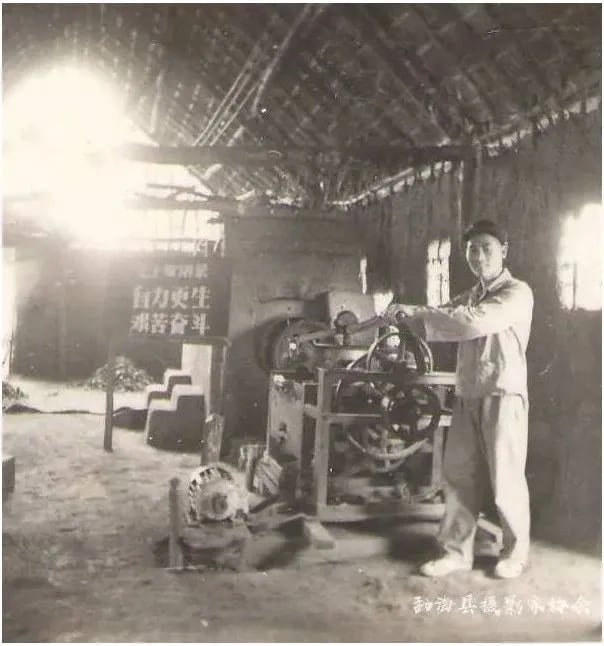
Other factories within the same corporation, including Côn Minh and Hạ Quan Tea Factories, also applied similar techniques. By the end of 1975, the “piling” technology was officially completed and stable enough for large-scale commercial purposes. To facilitate export management, the Yunnan Tea Company officially applied a 4-digit product code for the entire industry.
For example, the Côn Minh tea factory has a very famous tea cake with the code 7581. This is considered the first commercially ripe Pu-erh tea cake in history. With 75 being the year the “piling” formula was completed, the number 8 is the grade of materials used for this tea cake, and 1 is the code of the Côn Minh tea factory.
Although the formula was completed earlier, Mạnh Hải tea factory launched their commercial ripe Pu-erh tea cake later. Because the first batches of “loose tea” (tán trà) produced were sold out immediately to Hong Kong. Since dim sum restaurants preferred loose tea, as they only needed to take the tea, put it in the pot, and brew it quickly for customers. They did not yet need to store it long before needing tea cakes.
Mạnh Hải tea factory later also released a tea cake considered the standard of ripe tea cakes, which is 7572. With 75 being the year the formula was completed, the number 7 is the grade of materials used for this tea cake, and 2 is the code of Mạnh Hải tea factory. Although it uses grade 7 leaves, it is mixed with a little young leaves. Therefore, the 7572 tea cake often has “golden buds” or “golden tips” scattered on the tea cake.
3. PROCESSING PROCEDURE
After the basic definitions and history above, you can somewhat understand the differences between raw and ripe Pu-erh tea. In short, both types of tea have the same processing procedures, the difference is that ripe tea must undergo an additional “piling” step.
Here is a summary table of the basic differences in processing between the two types of raw and ripe tea:
| RAW TEA | RIPE TEA | |
|---|---|---|
| Ingredients | Yunnan large leaves, Shan Tuyết. | ✅ |
| Kill green | Pan-fried or machine. The temperature of the tea leaves is kept at about 80 – 85°C to inhibit part of the “enzyme”, helping to retain activity to support long-term storage. | ✅ |
| Rolling & drying | Rolled to shape the leaves. Must be dried under sunlight (sái thanh). | ✅ |
| Piling | ❌ | Mandatory step. The tea quality is classified for separate piling. The tea pile is placed on a floor about 1 – 1.5 m high (traditional style) or piled above ground/in bamboo baskets. Humidity is about 50 – 70%. Continuous microbial fermentation for 45 – 60 days. |
| Pressing cakes | Remove stems and old leaves (hoàng phiến) → quickly steam to soften leaves → press into molds with stone or machine → naturally dry. | Dry and sift → quickly steam to soften leaves → press into molds with stone or machine → naturally dry. |
| Storage | Use immediately or store for several years to several decades to continue transforming thanks to the tea’s inherent activity. | Has formed a sweet flavor thanks to the “piling” process. Can be consumed immediately (especially with tea piled above ground or in bamboo baskets) or stored for several more years to reduce the “piling” smell. |
4. SENSORY DIFFERENCES
Before referring to the following comparison table, you should know that each tea region will have its own characteristic flavor profile. For example, raw tea from Tây Côn Lĩnh in Hà Giang will differ from tea coming from Tủa Chùa (Điện Biên). Not only different in climate and terroir, but the ancient tea trees in Tủa Chùa also differ genetically from the tea trees in Tây Côn Lĩnh.
And our country’s raw tea will of course differ from raw Pu-erh tea from Yunnan. Not to mention that each mountain is further divided into different villages or sub-regions. In the same mountain, the same district, but different tea qualities are quite normal.
Therefore, it is impossible to gather a common flavor profile for raw or ripe tea. Thus, the following comparison table is only a general reference. To give you a “beginner’s perspective” on the differences between these two types of tea.
| Criteria | Raw tea (New < 3 years) | Ripe tea (After piling > 6 months) |
|---|---|---|
| Tea cake color | Grayish green-brown rustic. Tea leaves are clear, gray-silver buds (ngân châm) mixed with young brown-green leaves. | Chestnut brown or reddish brown. If mixed with young buds, there will be golden buds (kim nha) mixed in. |
| Tea water color | Yellow-green or light amber yellow. When poured into a glass teapot, you can see the “fuzz” floating in the water. | Brown-red like wine or black-brown like herbal medicine. The tea water is thick, shiny, and often has a thin layer of golden oil on the surface. |
| Main aroma | Floral, fruity (dried apricot), honey, fragrant wood, and clean sun. | Wet earth, rotten wood, old books, lemongrass, herbal medicine, red dates, mushroom soup, honey… |
| Taste characteristics | Bitter and astringent. Has a mineral feel. Sweet like rock sugar or artichoke flower. Clear sweet aftertaste. | Warm and smooth. Sweet like honey or date fruit. |
| Mouthfeel | Fresh and vibrant. Stimulates saliva production in the mouth and on the surface of the tongue. | Warm and thick (thick body) like broth. |
| Storage | Long-term storage will develop notes of agarwood, honey, ripe fruit, and herbs. | Long-term storage will make the tea aroma “cleaner”, reducing the piling smell (sour and fishy). The wet earth and rotten wood aroma gradually fades, allowing other flavor layers to stand out more. |
5. HEALTH BENEFITS
The following is a comparison of the health benefits of raw and ripe Pu-erh tea. Based on the overview study by Jia et al. (2002).
Note that most evidence comes from cell and animal studies. Clinical studies on humans are less common.
Many studies only refer to Pu-erh tea in general, without specifying whether it is raw or ripe. From what I’ve seen, it seems that ripe tea is prioritized for more research.
| Benefits | Raw tea | Ripe tea |
|---|---|---|
| Main components | Rich in free polyphenols, single catechins (like EGCG), and high-activity caffeine. | Rich in high molecular weight polyphenols (theabrownins), polysaccharide complexes, and organic acids produced by microorganisms. |
| Regulates gut microbiota | Basic effects, mainly showing overall antibacterial activity in the digestive tract. | Strongly restructures the microbiota, reduces the proportion of obesity-causing bacteria, increases beneficial bacteria, and promotes the production of short-chain fatty acids. |
| Regulates blood lipids & Weight loss | Reduces acute fat absorption in the intestine by indirectly inhibiting fat-digesting enzymes. | Deeply impacts the bile acid cycle in the liver, helping to lower cholesterol, triglycerides, and reduce visceral fat accumulation. |
| Blood sugar control | Records the effectiveness of improving blood sugar at the preclinical trial level (test tube). | Has great potential in improving glucose metabolism and reducing insulin resistance (not enough data to confirm absolute superiority over raw tea). |
| Antioxidant activity | Directly cleans up very strong intracellular free radicals thanks to the intact content of catechins and EGCG. | The ability to directly scavenge free radicals is average due to catechins that have been oxidized and metabolized into theabrownin. |
| Systemic anti-inflammatory | Active anti-inflammatory thanks to the direct impact of natural polyphenol compounds available in tea leaves. | Indirect anti-inflammatory through the role of theabrownin and the metabolites produced after fermentation. |
| Liver & Cardiovascular protection | Reduces oxidative stress at liver cells and blood vessels, preventing acute tissue damage from toxins. | Reduces liver enzymes, limits fatty liver, and minimizes the risk of long-term metabolic syndrome. |